From Seoul to Salzburg: Ambassador Dae-jong Yoo and Ambassador Martin Weiss on Culture and Diplomacy
Interview by Pauline Yeung, Audrey Chow, and Hau In Tang
Introduction
In an era marked by geopolitical uncertainty, technological acceleration, and shifting centers of economic influence, culture is no longer merely decorative to diplomacy. It can open doors where formal politics stalls, sustain relationships when official channels are tense, and help societies speak to one another through memory, identity, emotion, and imagination.
Korea and Austria offer two contrasting models of cultural influence: one associated with the explosive global rise of contemporary popular culture, the other with centuries of classical heritage and institutional prestige. Together, they illuminate how culture travels, adapts, and becomes diplomatic power.
In this joint interview, Dae-jong Yoo, former Korean ambassador to France, and Martin Weiss, former Austrian Ambassador to the United States, reflect on cultural diplomacy from the perspectives of Korea, Austria, and the wider world. Their conversation moves from K-pop and webtoons to Mozart and the Vienna Philharmonic, from the National Museum of Korea to Salzburg Global, and from soft power to the rule of law in a fractured international order.

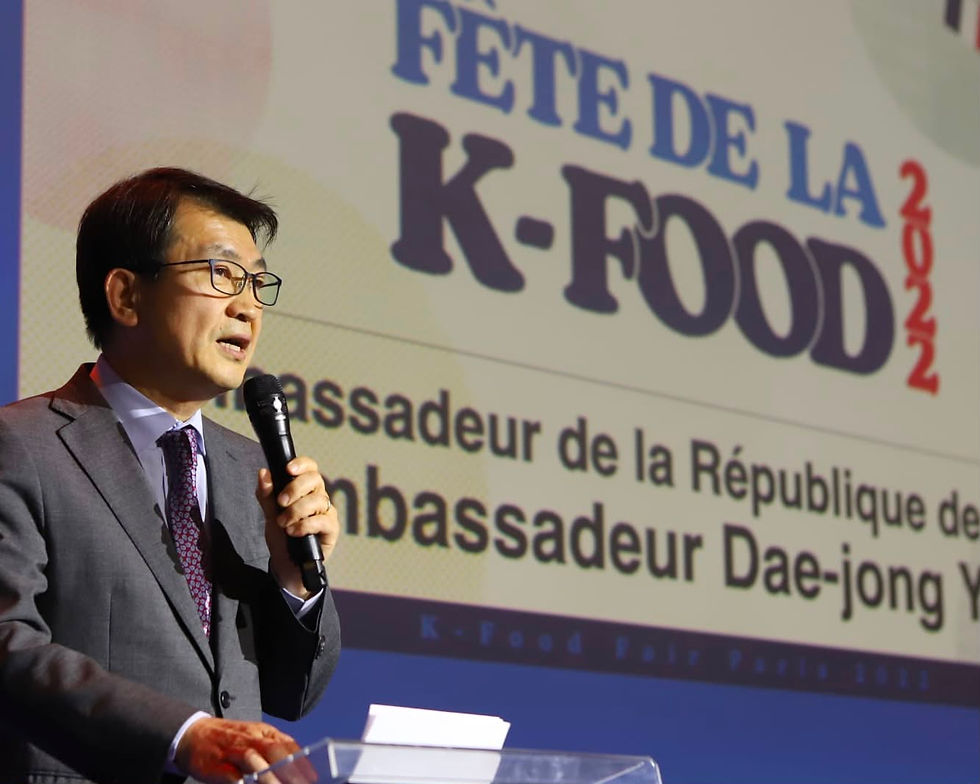
Q1. Ambassador Yoo, you studied French literature, trained at ENA, and served as Ambassador of the Republic of Korea to France between 2020 and 2022. Your career has been shaped as much by Europe as by Korea. When you encountered European cultural life as a diplomat rather than as a student, did it feel different?
Ambassador Yoo I Yes, it felt quite different. As a student, you simply enjoy culture. As a diplomat, you have to reflect on it and help two countries and two peoples understand each other.
In the 1980s, when I was studying French literature in Seoul, I encountered French and European culture through books and cinema. I was fascinated by the great thinkers and writers of Europe and France. Later, in the early 1990s, when I studied in France, I was deeply impressed by the Fête de la Musique, the nationwide music festival created by French Minister of Culture Jack Lang. I saw how local communities embraced and celebrated culture together. I would call this “culture nearby.”
At that time, great museums, classical performances, and major literary events were at the center of cultural life. But engaging with them often required time and preparation, so they were less accessible than they are now.
When I returned to Europe as an ambassador in the 2020s, Europe had changed significantly. Popular culture, digital platforms, and global influences were now integral parts of cultural life, including in France and in Paris. A classical performance in central Paris and a K-pop concert in an arena could take place in the same city. Korean culture was also booming in Europe, especially in France. Many young people were majoring in Korean language and enjoying K-pop. So yes, it was different — but both experiences were good for me to enjoy.
Q2. Ambassador Weiss, you served as Austrian Ambassador to the United States from 2019 to 2022. Washington, D.C. is one of the world’s most powerful political capitals, but by European standards it is a relatively young cultural one. What was special about the way politics intersected with culture in D.C.?
Ambassador Weiss I Washington, D.C. is a very political city. Everything that happens there is about politics — the White House, Congress, political dinners. If you go to a dinner party in Washington, you will talk about politics. You will not talk about culture. That is simply a fact of life.
But of course, there are important cultural institutions in Washington, including the Kennedy Center and beautiful galleries. Culture is clearly part of D.C. society, and every foreign embassy wants to leave a cultural footprint.
When the Vienna Philharmonic plays at the Kennedy Center, Austria wants to show that this is part of its tradition and culture. For smaller or medium-sized countries, culture allows you to have influence beyond your size. In Austria’s case, it is sometimes said that Austria is a medium-sized country but a superpower when it comes to culture.
In a political city, you sometimes try to lead the conversation to something else. Sometimes it works, and sometimes it does not. But at the end of the day, Washington remains one of the most political cities in the world.

Q3. Ambassador Yoo, Korean cultural diplomacy can lead with contemporary culture — cinema, music, gastronomy — or foreground traditional and classical forms. Are there examples where tradition meets innovation in Korean culture?
Ambassador Yoo I Korea’s love of entertainment has very deep roots. Historical records from about 2,000 years ago describe the ancestors of Koreans as people who enjoyed drinking, singing, and dancing. Culture in Korea naturally transcends time and generations, adapting to new trends and ideas.
In the second half of the twentieth century, Korea rebuilt itself from the ground up. Through modernization, democratization, and human rights, Korean society embraced universal values and norms. Korea is also highly advanced in digitalization. These conditions allowed tradition and innovation to come together and helped Korean culture be shared more easily with the world.
One interesting example is K-pop Demon Hunters, which combines a K-pop idol premise with traditional Korean demon-hunting folklore. It uses action, comedy, and a light romantic thread, so even audiences who do not know Korean history can follow it easily. Tradition and innovation work together in one popular form.
Another example is the National Museum of Korea, especially the Room of Quiet Contemplation where visitors view the Pensive Bodhisattva’s statue in a serene setting. Traditional-themed merchandise, such as tiger motifs and traditional aristocratic hat items, regularly sells very well. In this case, heritage lives in daily life, not only in exhibitions.
Q4. Ambassador Weiss, Austria’s cultural diplomacy operates from a deep reservoir of classical heritage, but it also has to speak to younger and more globally connected generations. How do you think about updating that heritage without diluting it?
Ambassador Weiss I This is a challenge not only for Austria but for Europe more broadly. Many visitors come to Europe and see it almost as an amusement park of history. Europe can sometimes come across as an old theatre that is ageing.
But things are also dynamic and changing. In Austria, film has become an important form of art in recent years. Austrian films have won Oscars for best foreign language film and have been successful at European festivals and around the world. Film is certainly a language that attracts new audiences.
Another example is the Austrian Pavilion at the Venice Biennale by Florentina Holzinger. It was provocative, modern, and described by the international press as one of the most exciting pavilions. It speaks to a modern audience.
If you go to the Vienna Opera House, you may see an average audience age of 70-plus, which shows a disconnect with the contemporary world. But every artist has to connect heritage to a new world. That is true for Austria and for other countries. It happens, and sometimes it happens quite successfully.
And when Ambassador Yoo described Koreans as fond of drinking, singing, and dancing, I thought: Austrians and Koreans should get along very well.
Q5. One tension in cultural diplomacy is between formal institutional efforts — government support, cultural districts, flagship festivals — and cultural energy from individual creators working outside institutions. Which has moved the needle more?
Ambassador Yoo I I think the relationship is more supplementary than conflictual. There is always some tension between government and individual creators, and this is true everywhere. But paradoxically, when the two meet and work together, that tension can become a source of new ideas and unexpected success.
In Korea, today’s thriving pop culture was once subject to tight government regulation and control. That is an irony. Creative people move hearts; institutions create opportunities. Creativity itself cannot be mandated. Governments can support, but they cannot manufacture the creative spark.

The best role for governments is to remove barriers and reduce risk, and to support creators without telling them what to make.
Different countries approach culture differently. The United States has no equivalent of a Ministry of Culture and has relied largely on the market. The United Kingdom has a culture ministry but has long used an arm’s-length approach, providing support while keeping distance from cultural players. France established a Ministry of Culture after the Second World War and tends to see cultural policy as both welfare policy and service to citizens. These different models shape how each country balances institutions and creators. Both sides should work in tandem.
Ambassador Weiss I I fully agree. You need both. If a young artist succeeds at a traditional festival like the Salzburg Festival, or wins an Oscar, it gives a huge boost to their career. Traditional festivals provide a mark of approval. But artists also need freedom to move.
The Salzburg Festival is very traditional, but every year it tries to bring young producers, directors, and artists into the scene. One cannot live without the other. It cannot just be older audiences sitting around the stage. It has to be inspiring.
If you tell a scientist to work on candles, he may produce a candle that burns longer or emits less smoke — but he will never invent the electric light bulb. For governments, the lesson is: support the arts but give them freedom.

Q6. Ambassador Yoo, Korea has invested significantly in cultural infrastructure, from agencies such as the Korea Creative Content Agency to landmarks such as Dongdaemun Design Plaza and art fairs such as Frieze Seoul. Do you see Korea’s cultural landscape as more government-driven than France or Europe more broadly?
Ambassador YooI In Korea, public spending on culture is widely accepted. People see it as an investment in the future and as a way of providing opportunities for young artists and younger generations to perform and enjoy culture.
There is also a strong vision behind Korean cultural promotion. After Korea’s independence from Japanese occupation, Kim Ku, the prominent independence movement leader, wrote in 1947 that he hoped Korea would become the source, goal, and model of a new and high culture for the world. He believed that cultural power, not military or economic power, would be Korea’s true contribution to humanity.
Decades later, after the 1997 Asian financial crisis, President Kim Dae-jung made culture a central part of Korea’s rebranding and national image. He saw how the United States earned revenue from Hollywood and how the United Kingdom did so from stage musicals, and he used these as models to support Korean popular culture.
So rather than simply asking whether Korea is more government-driven, I would say each country has its own circumstances. The important thing is to build consistent cultural policy on those circumstances.
Q7. Ambassador Weiss, Salzburg Global has been building bridges through structured dialogue as a nonprofit organization since 1947. How do you think about that model in a world where informal, digital, creator-driven exchange is happening at a scale no institution can match?
Ambassador Weiss I Social media has dramatically accelerated everything. If we want to know what is happening today in a crisis, we go to X or another platform and see the latest videos. But just because things have sped up, have they improved? Is our information landscape better? Do we have a deeper understanding of difficult questions? I think that is debatable.
Salzburg Global tries to create spaces where people can come together without a loudspeaker, microphone, cameras, or lights. There are moments when you close the doors, apply Chatham House rules, and discuss complex questions without being quoted in the media. You do not have to defend yourself publicly; hopefully, you can learn something.
That is just as needed today as it was in 1947 after a devastating world war. The value of this model has not decreased. Difficult questions need to be discussed in a room where people can speak openly without being branded or pulled before a newspaper audience. That reassures me that Salzburg Global’s model had value then and still has value today.
Salzburg Global is also connected to The Sound of Music, a film that is itself extraordinarily global. You can ask people from Korea, Latin America, Russia, Africa whether they have seen it, and the overwhelming answer is yes. Even though the film was produced 65 years ago, it has held its brand amazingly well. In Austria, people may not know or cherish it as much, but it remains a global door opener with many positive connotations.
Q8. One remarkable cultural phenomenon of the last decade is the global appetite for everyday affect — slow cooking videos, ASMR, and aesthetics of calm and care. High culture traditionally asks audiences to rise to meet it, while this kind of culture meets people where they are. What is your view on this trend?
Ambassador Yoo I The growing appetite for culture that offers calm and care is very interesting. We live in an age of social media and immediate communication, where simple and gentle content such as ASMR can travel instantly. Being easy to reach does not necessarily make something shallow.
Uncertainty and rapid transformation — from artificial intelligence, climate change, geopolitical rivalries, and supply chain disruptions — have added new layers of stress to daily life. Under these circumstances, content that offers peace and healing is not a luxury; it is a genuine form of relief.
Much of this style, with its focus on common care, has deep roots in Korean and Asian sensibility. Korean dramas and K-pop can become an emotional sanctuary, a way for young audiences to find comfort and express identity. Korea is also a highly egalitarian-minded society, free from old class barriers, and Koreans are quick to popularize new trends and ideas and make them enjoyable for everyone.
Ambassador Weiss I I would not draw too sharp a distinction between high art and accessible art. High art may have an entrance fee: you may have to study, prepare, or buy an expensive ticket before you can appreciate it. But good art, whatever form it takes, speaks to things that are eternal.
Think of Shakespeare. He talks about love, hate, despair, and hope. These are fundamental to human nature. Good art should meet you where you are. It should touch your feelings and emotions.
Whether it is Shakespeare, Mozart, K-pop, or a good movie, the question is whether it touches a human being. That is the measure of success. I would not say there is art that is easy to access and art that is hard to access. There is good art that speaks to you, and bad art that does not speak to you.

Q9. A follow-up question: what are your thoughts on AI-generated art?
Ambassador Weiss I To me, this is like Adam and Eve and the apple. Once the apple has been plucked from the tree, there is no way to hang it back. AI is now part of our lives. There is no way to close the door and say we do not want to know about it.
Artists will have to work with AI. Some people may argue that if AI drew something, then it was not the artist. But perhaps the artist used the AI image and painted over it or used it as a basis. Like any good instrument, AI will be part of our lives and our art, whether we like it or not.
Some artists will make it work in a way that speaks to us. Others may use it in a way where the computer seems more creative than the artist. But there is no going back.
In Austria, discussion of AI often involves fear: people worry AI will take away jobs from teachers. But there is another way to look at it: AI can empower teachers if they know how to use it. I would much rather be in love with opportunities than be in fear of what can go wrong.
Ambassador Yoo I At first glance, AI is threatening and surprising enough to make many people defensive rather than positive. But as Ambassador Weiss said, the apple is now on the ground. We cannot avoid or deny reality.
The question is how to make AI positive and beneficial to society, and how to use it to address questions such as climate change or poverty. We should find ways to gain the maximum benefit from AI while managing the backlash and risks that come with it.
Q10. Ambassador Yoo, the webtoon — Korea’s vertical-scroll narrative format — has become one of the most widely consumed storytelling forms in the world, spawning major film and television adaptations. It does not map neatly onto literature, comics, or cinema. What is your view of a form that is genuinely new and Korean but does not fit existing prestige categories?
Ambassador Yoo I The webtoon is a new art form of our time. It is a combination of culture and technology. Korea was the first country to develop this because it had highly networked, high-speed internet and widespread smartphone use. Korea set the standard for the webtoon.
As Ambassador Weiss said, art and culture give us thought, pleasure, and something to reflect on as human beings. We live in a society very different from a century ago, with tremendous technological advancement. Under these circumstances, new forms of art should appear, and we should accept them.
But prestigious cultural categories are always slow to recognize new things. Institutions catch up later. Cinema and jazz were once seen as commercial, not as art. The challenge is to support new forms early, not wait until they become respectable.
Webtoons became common on phones before global streaming took off. When the pandemic kept people at home, audiences watched more and became open to new things. Korean dramas and films, many based on webtoons, were ready on Netflix. Social media and word of mouth did the rest.
Q11. Ambassador Weiss, Europe historically exported many cultural forms the world considered “serious” — classical music, opera, philosophy, literature. Today, much global cultural energy seems to emerge elsewhere, including Seoul. Does Europe still feel culturally central to you, or has the geography of cultural influence changed?
Ambassador Weiss I Things are definitely changing. Economically, Europe was for a long time a center of the world economy. In recent years, the United States has continued to grow, China has grown significantly, Korea has done very well, and Europe has rather stagnated. Art is also connected to dynamism and money; often one influences the other.
At Salzburg Global, we had an Africa year and ran many programs with African artists and young politicians. I was very impressed by the level of energy and optimism. One young African politician said on our stage that he had never felt more optimistic in his life than today. Try to find a European who would say that. It showed me a young continent with optimism about what it can do and how it can change the world.
But there is still creative energy in Europe. Everyone has to struggle and work to be successful. The world is changing before our eyes. It is also becoming more dangerous and problematic, but that can be fertile ground for young artists.
Q12. Ambassador Yoo, Korean cultural identity is very particular — rooted in language, historical experience, and forms that do not always translate easily. Yet Korean culture has become globally popular and is absorbed by audiences with no direct connection to Korea. What explains this paradox?
Ambassador Yoo I I would summarize it in three reasons. First, the particular often travels well. Audiences are drawn to something specific, not something bland. Korean works succeed because they are clearly Korean, not in spite of being Korean.
Second, Korean culture deals with universal feelings — intense, conflictual feelings that people routinely experience in modern society. The setting is Korean, but the story and emotion are easy to feel and share. That is how the particular becomes universal.
Third, Korea’s modern history is full of events and therefore provides a rich reservoir for storytelling. War, division of the Korean Peninsula, rapid economic growth, urbanization, the nuclear family, democratization, crisis, and recovery all give Korean culture dynamic and dramatic energy. They also give it strong emotion and a deep interest in human dignity.
People around the world recognize something true in it, even in very different settings.
Q13. Both of you have worked in contexts where culture and politics are closely intertwined. Are there things culture allows you to address — identity, memory, tension between countries — that formal diplomacy cannot touch?

Ambassador Yoo I A classic Austrian example is the Congress of Vienna in 1814 and 1815, which showed the power of soft power in shaping diplomatic outcomes.
A more modern European example is the relationship between Germany and France. Since 1963, the Franco-German Youth Office has supported over 9 million youth exchanges. As is often said, Franco-German reconciliation was completed not by foreign ministries but by young people themselves.
In East Asia, questions of history and memory are very difficult at the official level. Korea and Japan have had historically tense relations, yet today they enjoy more collaborative ties than at many points in recent decades. This has been made possible in part by increasing numbers of visitors, tourists, and cultural exchanges, especially among younger generations. Shared engagement with beauty, film, popular culture, and food builds human connections that help move diplomacy forward.
Regional governments can also play an important role when central government relations are sour. I now work as a special adviser for international cooperation for the governor of Gyeonggi Province, which has a population of 14 million and is a center of Korea’s industrial and high-tech power. Two years ago, Gyeonggi Province invited Chinese party secretaries to Korea at a time when relations between the central governments of China and South Korea were difficult. Alongside meetings with our governor, they also met Korea’s prime minister, foreign minister, and industry minister. This shows how regional governments can combine economic, cultural, and diplomatic channels when central government relations are difficult.

Ambassador Weiss I I fully agree. Never underestimate soft power. You can ask who won the Cold War — was it NATO, was it nuclear weapons? But you can also argue that what truly won the Cold War was Elvis Presley, Hollywood, and the Fulbright Program, because these brought people together in ways that politics could not.
Sometimes political discourse becomes complicated because every politician has a domestic audience. They have to pander to their party or appear as hardliners. But culture can penetrate this. Young Japanese people may love K-pop, even though the history between Japan and Korea has its problems. That history does not disappear. Culture opens a different level of communication.
At the same time, we should be careful not to use art and culture simply as a political vehicle. Language is open to anything: it can carry the most beautiful poems, but it can also carry the most terrible ideas. Art and culture are similar. They should remain vessels open to interpretation, not mantles for selling ideology. When culture becomes only a tool of political messaging, I see that as a problem.
Overall, one of the biggest mistakes, in my view, is to underestimate soft power. Water is soft, but water is also very powerful. Soft power goes a long way.
Q14. The final question concerns the shift from a unipolar to a multipolar order. Historically, periods of power transition often bring rivalry and instability. Do you see today’s transition primarily as a challenge to international cooperation, or as an opportunity to build a more inclusive global system? What role can culture, diplomacy, and institutions play?
Ambassador Weiss I Antonio Gramsci wrote in the 1930s that the old world order had disappeared, but the new world order had not yet appeared. This was the time for monsters. That seems to fit our day. The old order is in disarray, and we have not yet found a new one.
It feels like a very dangerous world. We see countries using war again as a means of politics. Apply that to Asia, where there are many unresolved questions around borders and territory. If countries decide to resolve these questions by war, our world becomes extremely dangerous.
As a diplomat, I would say today’s transition is both a risk and an opportunity. We know change is necessary. The old United Nations Security Council system is over-aged and needs adjustment. But I do feel we live in a riskier world than the one I grew up in.
This makes it important for countries that believe in the rule of law and international order, to stick together and influence new developments in the world. It is not easy. But instead of looking only at old problems, we should look at the future and what we stand for. There is a lot we can do together. I am an eternal optimist, so I believe somehow it will work out — but we are living in a risky world.
Ambassador Yoo I I totally agree. As a practitioner of diplomacy, I believe this moment offers both challenges and opportunities. The outcome depends on the choices we make now.
The question is whether the international community can build an agreement for cooperation faster than the pressures of rivalry pull nations apart. Culture should play an increasing role because it can do things formal institutions cannot easily replicate.
In a multipolar world, no single country or actor dictates the conversation or monopolizes the global order. Korean cinema, Austrian music, African folklore — each carries its own values and ways of seeing the world. Diversity is the spice of world life.
Korea’s experience shapes my view. Korea has benefited enormously from open trade, cultural exchange, the rule of law, and multilateral cooperation symbolized by the UN system. We should be creative and strategic enough to build a more inclusive and representative global system that deepens peace and prosperity.
Regional government also has a role. Gyeonggi Province has memoranda of cooperation with 10 Chinese provinces and cities, representing 40 percent of China’s population and 45 percent of its GDP. Such cooperation can provide a small safety net to maintain exchange, cultural cooperation, and economic collaboration even when central government relations are difficult.
The reality is difficult, but we should stay positive, work together, and make use of culture, civil society, regional governments, and institutions. There is the “Vienna spirit” of seeking consensus, and it is precisely this spirit that can help save our planet and our people.
Footnotes
About KnitKnot Global
Founded by Pauline Yeung in 2024, KnitKnot Global (KKG) is a consulting company with business lines in finance and innovation, family business and family office, and talent cultivation and development. Pauline's vision is to continue bringing people from different walks of life together for connection and community, not unlike embroidery, and to use words to weave together tapestries that tell compelling stories. In recent years, Pauline has worked with central banks, financial institutions, business schools, prominent families, and start-ups and entrepreneurs, bridging diverse cultures, building resilient networks, advising innovative initiatives, engaging in Track II diplomacy, and serving as a thought leader in global soft power. For more information, please visit https://knitknotglobal.com/
About Gyeonggi Province
Surrounding Seoul, the national capital of South Korea, Gyeonggi Province is the country's most populous province and a living crossroads of tradition and transformation. Home to UNESCO World Heritage Sites such as the Hwaseong Fortress and the royal tombs of the Joseon Dynasty, the province carries centuries of Korean history within reach of one of Asia's most dynamic metropolitan regions. Gyeonggi Province is also a global hub for semiconductors, consumer electronics, and content production, helping carry Korean culture to audiences worldwide. By connecting residents, businesses, and global partners, Gyeonggi Province serves as a bridge between Korea's deep cultural roots and its forward-looking ambitions. For more information, please visit https://english.gg.go.kr/
About Korea Europe & You
Korea, Europe and You (KEY) is an international think tank and action-oriented platform that works with global partners to foster convergence between Korea and Europe, bringing together leaders and innovators from business, culture, academia, and the public sector. Under the leadership of Chairman Philippe Li and President JaeHoon Yoo, KEY develops concrete initiatives, pursues cross-regional collaboration, and co-creates sustainable and future-oriented solutions. The Hong Kong Chapter of KEY highlights Hong Kong’s role as a cultural and intellectual bridge between Asia and Europe, advancing KEY’s mission through events that encourage critical thinking, cross-cultural understanding, and collaborative innovation. For more information, please visit https://www.key-society.com/
About Salzburg Global
Salzburg Global is where open-minded leaders worldwide gather for breakthrough conversations on pressing global issues. Since 1947, the non-profit has convened more than 40,000 Fellows from over 170 countries across 1,100+ sessions, creating spaces to question assumptions, embrace nuance, and move beyond fixed ideas. Its first session brought together young Europeans and Americans, including survivors, resistance veterans, prisoners of war, and former enemies, to explore peace after World War II. More than 75 years later, Salzburg Global carries that founding spirit across Peace & Justice, Education, Health, Culture, and Finance & Governance—challenging Fellows to change the conversation. For more information, please visit https://www.salzburgglobal.org/
About the Interviewees
Dae-jong Yoo

Yoo Dae-jong is currently Special Advisor for International Cooperation to the Governor of Gyeonggi Province. Previously, he served as Ambassador of the Republic of Korea to France from 2020 to 2022 and as Deputy Minister for Planning and Coordination at Korea’s Ministry of Foreign Affairs, overseeing ministry-wide planning, coordination, and administration. Since joining the Ministry in 1988, Mr. Yoo has held senior positions including Director of Human Resources, Director for the United Nations, and Director-General for International Organizations from 2014 to 2016. In these roles, he managed issues related to UN policy, disarmament and non-proliferation, human rights, social affairs, international security, the OSCE, NATO, and cyberspace. His overseas assignments include postings to Korea’s missions in Geneva, New York, and Vienna, as well as the Embassy in Senegal. From 2010 to 2012, he served as Minister Counsellor in Vienna, and in 2012 was assigned to Korea’s Permanent Mission to the UN in New York. In 2016, he was appointed Ambassador to Serbia. Mr. Yoo holds degrees in French literature and international relations from Seoul National University. He also studied at France’s ENA and was a visiting scholar at UC San Diego.
Martin Weiss

Martin Weiss became the ninth president of Salzburg Global in August 2022. Leveraging Salzburg Global's long history, Martin is leading Salzburg Global to have future influence and impact on today and tomorrow's leaders. Martin's career has championed personal and professional exchanges to create a more equitable and peaceful world. Before this appointment, Martin served as Austrian Ambassador to the US between November 2019 and July 2022. He had also served as Ambassador to Israel (2015-19), Director of the Press and Information Department of the Foreign Ministry (2012-15), and Ambassador to Cyprus (2009-12). Martin also held several postings in the United States. Martin started as a Human Rights Attaché for the Austrian Mission to the United Nations in New York in 1991 before taking on the positions of Political Counselor, Counselor for Congressional Affairs and Public Diplomacy, and later Director of the Austrian Press and Information Service at the Austrian Embassy in Washington, and as Austrian Consul General in Los Angeles (2004-09). Martin holds a law degree (equivalent to JD) from the University of Vienna and a Master of Laws (LLM) from the University of Virginia (UVA).
About the Interview Team
Pauline Yeung

Pauline Yeung is a multilingual entrepreneur, board director, and global leader in family wealth and international finance. The founder of consulting firm KnitKnot Global, she is an Adjunct Associate Professor at Hong Kong University, a Board Member of KEY, a Leadership Fellow at Korea Foundation for Advanced Studies, and an Asia 21 Next Generation Fellow at Asia Society. She holds degrees from Princeton University and Central Saint Martins.
Audrey Chow

Audrey Chow is Next Gen Co-Lead of the KEY Hong Kong Chapter. She read law at the University of Cambridge on the prestigious Prince Philip Scholarship and served as President of the Trinity Hall Law Society. She has gained experience at KPMG and Latham & Watkins LLP and recently completed the PCLL at the University of Hong Kong. Audrey explores the intersection of law, culture, and identity through public discourse and global exchange.
Hau In Tang

Hau In Tang is a second year LLB student at The Chinese University of Hong Kong. A recipient of the CUHK Vice Chancellor's Scholarship for Excellence and the AIA Scholarship, she serves as the NextGen Co-Lead for the Hong Kong Chapter of KEY. Hau In is also the Publication Secretary for the CUHK Undergraduate Law Society. A competitive debater, she is heavily involved in the local debate circuit and community volunteer work.


Comments